

The rivalry between the Los Angeles Chargers vs Kansas City Chiefs Match Player Stats has quietly become one of the most fascinating matchups in the NFL. Every time these two AFC West teams meet, fans don’t just watch the final score—they obsess over player stats, individual performances, and how star players swing momentum. From elite quarterbacks to defensive playmakers, this matchup consistently delivers data worth breaking down.
What makes the Chargers vs Chiefs games special is the contrast in styles. Kansas City thrives on explosive offense and controlled chaos, while Los Angeles often relies on precision, arm talent, and defensive adjustments. When you analyze player stats from these games, you see more than numbers—you see strategy, pressure, and execution under fire.
In this article, we’ll take a deep, expert-level look at Los Angeles Chargers vs Kansas City Chiefs match player stats, covering quarterback duels, skill position performances, defensive standouts, and the hidden stats that usually decide the outcome.
Quarterback Performance Comparison: Herbert vs Mahomes
The quarterback matchup alone makes Chargers vs Chiefs games must-watch football. Justin Herbert and Patrick Mahomes are two of the most talented quarterbacks of this generation, and their statistical battles often define the game’s narrative.
Mahomes’ stats in these matchups usually highlight efficiency under pressure. His completion percentage tends to stay high even when the Chargers’ defense forces tight windows. Passing yards often pile up through a mix of short improvisational throws and deep shots that stretch coverage. Touchdown totals reflect his ability to capitalize in the red zone, especially when plays break down.
Herbert’s player stats, on the other hand, showcase raw arm strength and accuracy. Against Kansas City, he frequently posts strong yardage numbers, especially on intermediate routes. His touchdown-to-interception ratio often improves in these games because he’s forced to play disciplined football against a high-scoring opponent. Even when the Chargers fall behind, Herbert’s passing volume boosts his overall stat line.
When comparing these two statistically, Mahomes usually wins in touchdowns and situational efficiency, while Herbert often shines in total passing yards and deep completions. The numbers clearly show that this matchup is less about mistakes and more about who executes better in crucial moments.
Running Back Stats and Ground Game Impact
While the headlines focus on quarterbacks, the running back stats in Chargers vs Chiefs games play a critical supporting role. Neither team is traditionally run-heavy, but rushing efficiency often determines time of possession and late-game control.
Kansas City’s running backs usually post modest rushing totals, but their yards per carry are often efficient. Screens, short check-downs, and misdirection runs inflate their all-purpose yard stats. In many matchups, Chiefs running backs quietly cross the 80–100 total yards mark when receiving yards are included.
The Chargers’ rushing stats tend to fluctuate more. In games where Los Angeles establishes even a decent ground game, their offensive balance improves dramatically. Running backs who average over four yards per carry against Kansas City help keep Mahomes off the field, which shows up indirectly in the final stat sheet.
From a statistical standpoint, the team with fewer negative rushing plays usually gains the edge. Chargers vs Chiefs games often come down to which running back group avoids tackles for loss and converts short-yardage situations efficiently.
Wide Receiver and Tight End Player Stats
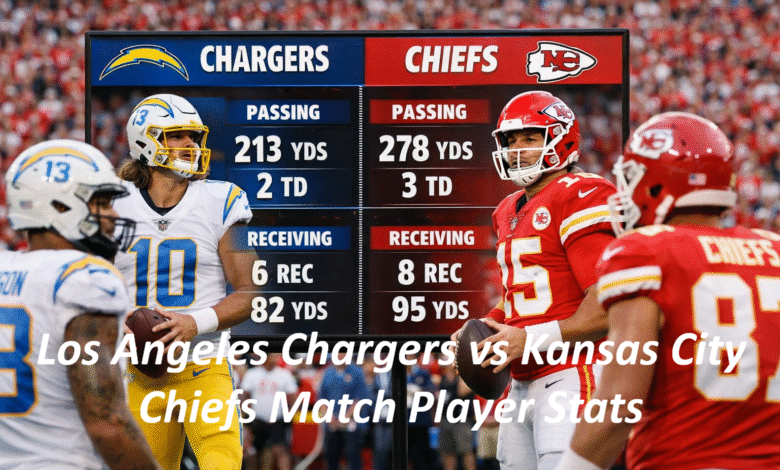
Skill position Los Angeles Chargers vs Kansas City Chiefs Match Player Stats are where these matchups truly shine. Both teams boast elite pass catchers who consistently deliver big numbers when it matters most.
Kansas City’s receivers often lead in yards after catch. Their stat lines typically feature high reception totals with moderate yards per catch, reflecting the team’s emphasis on timing and space. Tight end stats are especially important for the Chiefs, as their production frequently spikes in third-down and red-zone situations.
The Chargers’ wide receiver stats tend to show more vertical aggression. Fewer receptions but higher yards per catch is a common pattern. When Herbert connects on deep throws, receiver stats can swing momentum instantly. Tight ends on the Chargers also contribute heavily in the middle of the field, especially against zone coverage.
When comparing both teams, Chiefs pass catchers usually dominate in total receptions, while Chargers receivers often lead in explosive plays. These statistical contrasts highlight the philosophical differences between the two offenses.
Defensive Player Stats: Tackles, Sacks, and Turnovers
Defense often gets overshadowed in high-scoring Chargers vs Chiefs games, but the defensive player stats tell a powerful story. Sacks, pressures, and forced turnovers frequently decide these matchups.
Kansas City defenders tend to rack up pressure stats rather than pure sack numbers. Quarterback hits and hurried throws show up clearly when reviewing game data. Linebackers often lead the team in tackles, reflecting their role in containing short passes and scrambling quarterbacks.
The Chargers’ defensive stats often highlight pass rush impact. Edge rushers usually post higher sack totals against Kansas City compared to other opponents. Interceptions are less frequent, but pass breakups and third-down stops show how effective the Chargers can be defensively.
Statistically speaking, the defense that generates at least one turnover usually swings the game. Chargers vs Chiefs matchups show a strong correlation between takeaways and final score margins.
Special Teams and Field Position Metrics
Special teams stats don’t always get attention, but in close AFC West battles, they matter. Kick return averages, punt distance, and field goal accuracy all influence momentum.
Kansas City’s special teams stats often reflect consistency. Reliable kicking and solid return coverage minimize mistakes. Field position stats usually favor the Chiefs slightly due to disciplined execution.
The Chargers’ special teams numbers can be more volatile. When they perform well, return yards and kickoff placement give the offense shorter fields. When they struggle, hidden yardage shows up clearly in opponent scoring efficiency.
Looking at these stats collectively, the team that wins the field position battle typically controls tempo—even if total offensive yards are similar.
Key Individual Performances That Shift the Game
Every Chargers vs Chiefs matchup seems to produce at least one standout stat line that defines the contest. Whether it’s a receiver posting over 120 yards or a defender recording multiple sacks, individual performances matter.
For Kansas City, it’s often a single player stepping up in clutch moments—third-down conversions, red-zone touchdowns, or late-game drives. These stats don’t always jump off the page initially, but they become obvious when reviewing situational data.
For the Chargers, breakout performances usually come from younger players or defensive standouts. A linebacker leading the game in tackles or a receiver posting a career-high yardage game can flip expectations.
These individual stat spikes are reminders that depth and preparation play massive roles in divisional games.
Final Thoughts: What the Player Stats Really Tell Us
When you analyze Los Angeles Chargers vs Kansas City Chiefs match player stats, one thing becomes clear: these games are rarely decided by a single category. It’s the combination of quarterback efficiency, explosive plays, defensive pressure, and situational execution that determines outcomes.
Mahomes’ stats often reflect control and adaptability, while Herbert’s numbers showcase resilience and firepower. Running back and receiver stats reveal contrasting offensive philosophies, and defensive metrics highlight which team rose to the challenge when pressure peaked.
For fans, analysts, and fantasy football players alike, this matchup is a goldmine of meaningful data. Every stat tells a story—and in Chargers vs Chiefs games, those stories are always worth reading closely.